Chinese SF Authors Who Shaped Modern Speculative Fiction from 1900 to Present
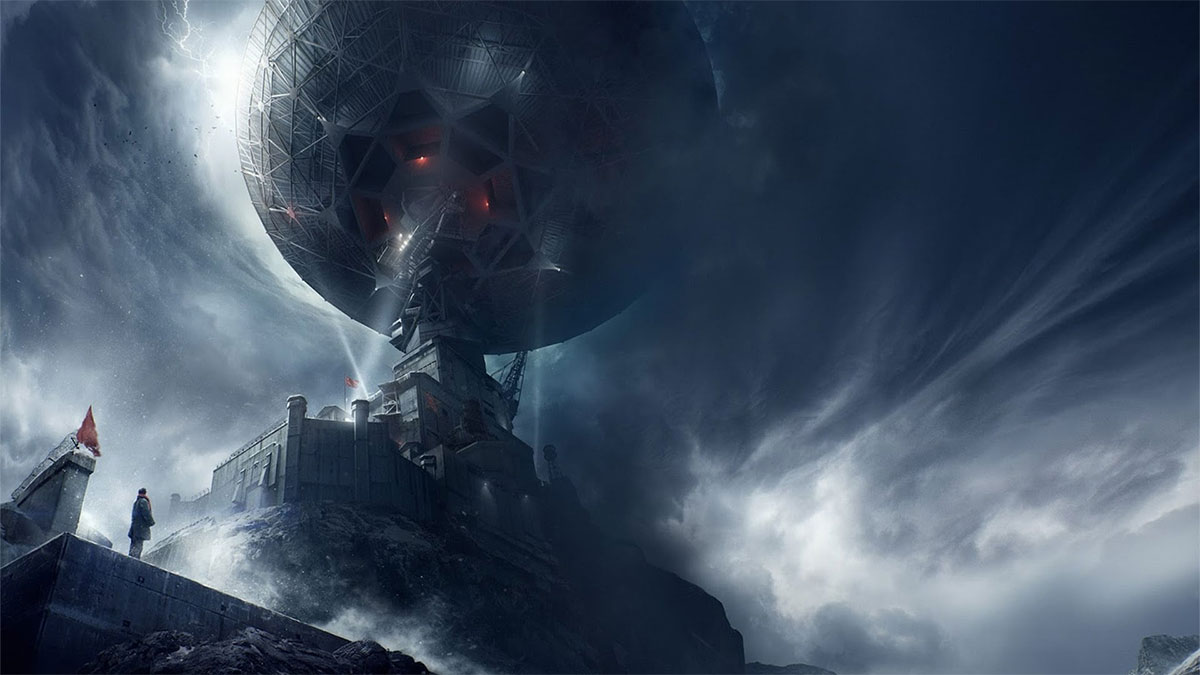
The international success of Liu Cixin’s Remembrance of Earth’s Past trilogy, beginning with the 2015 Hugo Award for Ken Liu’s translation of The Three-Body Problem, has created the widespread perception of a sudden and explosive “boom” in Chinese science fiction. This narrative, amplified by high-profile adaptations, suggests a literary genre emerging fully formed onto the world stage. While this moment of global recognition is undeniably significant, it is a narrative of external perception, not internal genesis. It obscures a complex, century-long literary tradition marked by cycles of fervent creation, political suppression, and resilient revival. Contemporary Sinophone science fiction is a vibrant and heterogeneous polylogue, a conversation among diverse voices from mainland China, Hong Kong, and Taiwan.
Related post:Essential Books for a Broader Understanding of China
The genre’s roots in China extend to the twilight of the Qing Dynasty, when reformers like Liang Qichao saw speculative fiction as a vital tool for national rejuvenation. Through original works like the unfinished utopian novel The Future of New China (1902) and translations of Western authors such as Jules Verne, science fiction was introduced as a vehicle for disseminating modern knowledge, inspiring technological progress, and imagining a future where China could reclaim its place on the world stage. This didactic, nation-building impulse continued after the founding of the People’s Republic in 1949, with a brief flourishing of Soviet-influenced stories aimed at popularizing science and promoting a “wonderful socialist future”. This period, however, was abruptly curtailed by the Cultural Revolution (1966-1976), during which the genre was denounced as “corrupt Western culture” and effectively disappeared from the mainland.
The genre’s modern revival began in earnest after the 1978 National Science Congress declared that “science’s spring has come”. This cultural thaw allowed for a sustained resurgence, anchored by the Chengdu-based magazine Science Fiction World (科幻世界). Founded in 1979 as Science Literature (科学文艺), this publication became the crucible of the contemporary scene. It survived the “spiritual pollution” campaign of the early 1980s that shuttered most of its competitors, established the prestigious Galaxy Award (银河奖) in 1985, and cultivated generations of writers and a massive fan base, reaching a peak circulation of over 400,000 by the late 1990s. It was within the pages of Science Fiction World that the authors who would come to define the modern canon, including Liu Cixin, Han Song, and Wang Jinkang, first found their audience.
This history reveals a fundamental evolution in the genre’s function. The early focus on national allegory and technological utopianism has given way to a more complex and critical engagement with the present. While some works continue to explore themes of national pride, the most acclaimed contemporary authors use the genre’s unique capacity for cognitive estrangement to dissect the profound social, ethical, and psychological consequences of China’s rapid and often disorienting modernization. Hao Jingfang’s Folding Beijing examines class stratification, Chen Qiufan’s The Waste Tide confronts ecological devastation, and Han Song’s surrealist nightmares probe historical trauma. They have transformed science fiction from a tool for promoting a national vision into a sophisticated lens for examining its profound discontents.
| Author (Pinyin & Chinese) | Key Region | Generational Cohort | A Key Work (Original Title) | English Translation Availability |
| Zheng Wenguang (郑文光) | Mainland China | Pioneer | Feixiang Renmazuo (飞向人马座) | “The Mirror Image of Earth” (tr. Sun Liang) |
| Tong Enzheng (童恩正) | Mainland China | Pioneer | “Shanhu Dao Shang de Siguang” (珊瑚岛上的死光) | “Death Ray on a Coral Island” (tr. “SFW”) |
| Liu Cixin (刘慈欣) | Mainland China | Three Generals | Santi (三体) | The Three-Body Problem (tr. Ken Liu) |
| Han Song (韩松) | Mainland China | Three Generals | Ditie (地铁) | “Submarines” (tr. Ken Liu) |
| Wang Jinkang (王晋康) | Mainland China | Three Generals | “Yadang de huigui” (亚当的回归) | “The Return of Adam” (tr. Carlos Rojas) |
| Chen Qiufan (陈楸帆) | Mainland China | New Wave | Huang Chao (荒潮) | The Waste Tide (tr. Ken Liu) |
| Hao Jingfang (郝景芳) | Mainland China | New Wave | “Beijing Zhedie” (北京折叠) | “Folding Beijing” (tr. Ken Liu) |
| Xia Jia (夏笳) | Mainland China | New Wave | “Bai Gui Ye Xing Jie” (百鬼夜行街) | “A Hundred Ghosts Parade Tonight” (tr. Ken Liu) |
| Baoshu (宝树) | Mainland China | New Wave | Santi X: Guanxiang zhi Zhou (三体X:观想之宙) | The Redemption of Time (tr. Ken Liu) |
| Tang Fei (糖匪) | Mainland China | New Wave | “Huángsè Gùshì” (黄色故事) | “Call Girl” (tr. Ken Liu) |
| Gu Shi (顾适) | Mainland China | New Wave | “Mòbǐwūsī Shíkōng” (莫比乌斯时空) | “Möbius Continuum” (tr. S. Qiouyi Lu) |
| Pan Hai-tian (潘海天) | Mainland China | New Wave | Kèlóng Chéngshì (克隆城市) | “The Hunger Tower” (tr. Nick Stember) |
| Ni Kuang (倪匡) | Hong Kong | Periphery | Wèisīlǐ Xìliè (衛斯理系列) | N/A (Limited) |
| Chan Koonchung (陈冠中) | Hong Kong | Periphery | Shèngshì: Zhōngguó 2013 Nián (盛世:中國2013年) | The Fat Years (tr. Michael S. Duke) |
| Chi Ta-wei (紀大偉) | Taiwan | Periphery | Mó (膜) | The Membranes (tr. Ari Larissa Heinrich) |
| Wu Ming-yi (吴明益) | Taiwan | Periphery | Fùyǎn Rén (複眼人) | The Man with the Compound Eyes (tr. Darryl Sterk) |
The Founding Generations – Forging a Genre
The revival of Chinese science fiction in the late 1970s was spearheaded by a generation of writers whose careers had been forged, and then fractured, by the immense political upheavals of the mid-20th century. Having come of age during the optimistic, science-focused 1950s, they were subsequently silenced and persecuted during the Cultural Revolution. Their return to writing in the post-Mao era was thus not a simple continuation of their earlier work. Their fiction became infused with the trauma of that intervening decade, transforming the genre into a space for processing recent history and cautiously critiquing the ideologies that had caused such profound social rupture. The careers of Zheng Wenguang and Tong Enzheng are emblematic of this process, demonstrating how the scars of the past became a powerful thematic engine for the genre’s rebirth.
Zheng Wenguang (郑文光)
Often called the “father of Chinese science fiction,” Zheng Wenguang (1929-2003) laid the groundwork for the genre’s post-1949 development. Born in Vietnam to Chinese parents, he repatriated in 1947 and later became a research fellow at the Beijing Astronomical Observatory. His early stories, such as the seminal “From Earth to Mars” (1954), were characteristic of the era: didactic, optimistic, and aimed at instilling a love for science in young readers within a socialist framework. This work was designed to smuggle educational points about astronomy and physics into an accessible adventure narrative, aligning with the state’s goal of national modernization.
Like many intellectuals, Zheng was silenced during the Cultural Revolution, an experience that left an indelible mark on his later writing. When he resumed publishing in the late 1970s, the didactic optimism of his early career was replaced by a more cynical and embittered tone. His 1980 story, “The Mirror Image of Earth”, is a powerful example of science fiction as “scar literature.” In the story, an alien civilization studying Earth presents humanity with holographic film clips of its history; the most recent and damning evidence of human depravity is footage from the Cultural Revolution, forcing a moment of painful self-reflection. His 1979 novel, Feixiang Renmazuo (Forward Sagittarius), billed as one of China’s first full-length SF novels, is a space opera that reflects the anxieties of the Cold War, depicting a Chinese spaceship forced into a perilous journey due to international espionage. Zheng‘s career was tragically cut short in 1983 by a stroke, shortly after he was subjected to a public “struggle session” for a story that was deemed scientifically and ideologically unsound, a stark reminder of the lingering political pressures faced by writers of his generation.
Tong Enzheng (童恩正)
Tong Enzheng (1935-1997) brought a unique perspective to the genre, combining his profound expertise as a prominent archaeologist and historian with speculative narratives. His academic work, which focused on the ancient history of Southwest China and uncovered evidence of a “southern Silk Road,” was groundbreaking, but his intellectual integrity and refusal to bend his scientific findings to fit state-supported Marxist-Leninist dogma led to his persecution during the Cultural Revolution, when he was labeled an “enemy of the people”. After supporting the 1989 Democracy Movement, he fled into self-imposed exile in the United States, where he remained until his death.
Tong’s science fiction is deeply intertwined with his academic passions. An early story, “A Guest from 50,000 Years Ago” (1959), creatively applies archaeological methodology to suggest that ancient Chinese astronomical records might be interpreted as the observation of a visiting alien spaceship. His most famous work, however, is the 1978 short story “Shanhu Dao Shang de Siguang” (“Death Ray on a Coral Island”). A technothriller about a Chinese scientist whose invention of a powerful atomic battery is coveted by a hostile foreign superpower, the story captured the national mood of the immediate post-Mao era, winning a national award and being adapted into China’s first science fiction film in 1980. The film’s plot, in which a brilliant Chinese scientist is tricked into working on a secret island laboratory for a villainous corporation, serves as a potent allegory for the isolation and moral compromises faced by intellectuals during the Cultural Revolution, while simultaneously reaffirming their ultimate loyalty to the nation. Through his fiction, Tong explored enduring themes of freedom, human dignity, and the individual’s place in society, using the speculative lens to comment on the profound traumas of his time.
The work of these foundational figures demonstrates that the 1978 revival was a necessary reckoning with a collective national trauma. The cognitive distance afforded by science fiction, using alien observers, foreign villains, or journeys into deep space, provided a relatively safe allegorical space to explore themes of intellectual suppression, persecution, and survival. This turn towards introspection and critique laid the essential groundwork for the more complex and socially engaged science fiction that would follow.
Part II: The Three Generals
The 1990s marked a pivotal decade for Chinese science fiction, a period of explosive economic growth and profound social transformation that created fertile ground for new literary explorations. It was during this time that three authors rose to prominence, their distinct styles and thematic concerns so influential that they became known as the “Three Generals of Chinese Sci-fi” (三大将). Liu Cixin, Han Song, and Wang Jinkang are not merely contemporaries; their collective work represents a tripartite philosophical response to the complexities of China’s modernization. Liu Cixin gazes outward to the cosmos, using the universal laws of physics to frame humanity’s existential condition. Han Song turns inward, employing surrealism to diagnose the psychological pathologies of a society in flux. And Wang Jinkang looks to the immediate future, using bioethics to probe the moral trajectory of technological advancement. Together, they established the thematic pillars upon which the modern genre is built.
Liu Cixin (刘慈欣)
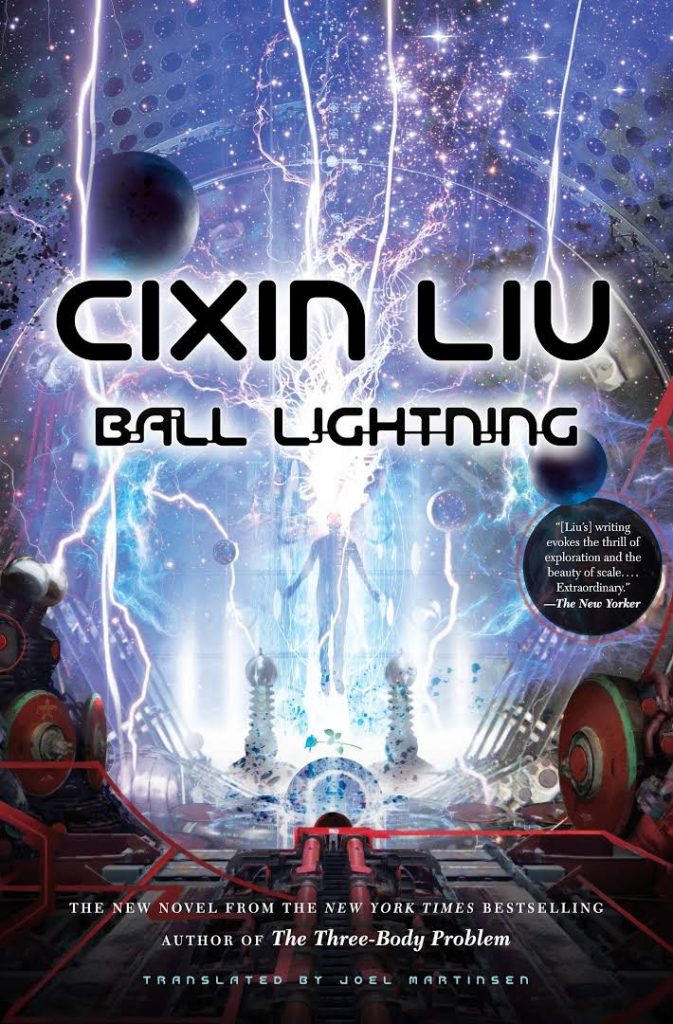
Liu Cixin (b. 1963), a former computer engineer at a power plant in Shanxi province, is unquestionably the most internationally recognized figure in Chinese science fiction. A multiple winner of China’s Galaxy Award, his reputation soared with the publication of his epic trilogy, Remembrance of Earth’s Past, which includes The Three-Body Problem, The Dark Forest, and Death’s End. His other major works include the novel Ball Lightning and numerous influential short stories, many collected in The Wandering Earthand To Hold Up the Sky.



Liu is a master of hard science fiction, renowned for his ability to weave complex concepts from physics and cosmology into narratives of breathtaking scope and imagination. His fiction operates on a vast, cosmic scale, yet is grounded in a sober, often ruthless, examination of civilizational dynamics. His most famous conceptual contribution is the “dark forest theory of the universe,” a chilling game-theory explanation for the Fermi paradox, which posits that inter-civilizational contact is inherently perilous, forcing rational societies into a state of mutual, preemptive hostility. This bleak perspective is deeply influenced by his childhood experiences during the Cultural Revolution, which instilled in him an understanding of how mass movements can drive humanity toward irrationality and violence. While he cites the cosmic wonder of Arthur C. Clarke and the political prescience of George Orwell as key influences, Liu’s unique vision lies in his synthesis of scientific rigor with a profound, almost tragic, sense of “cosmic sociology,” exploring humanity’s struggle for survival in a universe that is magnificent but fundamentally indifferent.
Han Song (韩松)
In stark contrast to Liu Cixin‘s cosmic realism, Han Song (b. 1965) plunges into the surreal and the grotesque. A long-time journalist for the state-run Xinhua News Agency, Han uses science fiction as a “warped mirror” to reflect the often-absurd realities of contemporary Chinese society. His works, which include the novel Subway (地铁) and short stories such as “Regenerated Bricks” and “Submarines”, are characterized by a dark, Kafkaesque, and often unsettling style.

Han’s fiction constructs what has been termed a “Gloomy China”, a landscape haunted not by traditional ghosts, but by the modern specters of technology, bureaucracy, and unchecked power. His novels often trap characters in inescapable allegorical systems; Subway depicts a subterranean civilization on the verge of collapse where passengers devolve into cannibalism, while his novel Hospital plunges its protagonist into a nightmarish medical bureaucracy that becomes its own terrifying reality. In “Regenerated Bricks”, rubble from the devastating Wenchuan earthquake is mixed with human remains to create new building materials, a macabre satire on the national obsession with progress and the erasure of painful memory. His work deliberately eschews linear narrative and easy explanation, embracing ambiguity and a sense of the uncanny to argue that in a society undergoing such rapid and disorienting change, a surrealist approach may be more truthful than realism itself. Through themes of clones, psychological manipulation, and dehumanizing systems, Han’s writing serves as a powerful, if disturbing, diagnosis of the nation’s collective psyche.
Wang Jinkang (王晋康)
Wang Jinkang (b. 1948), the eldest of the Three Generals, came to writing later in life after a career as a senior petroleum engineer. He began publishing in 1993, making his debut with a story written for his son, “Adam’s Regression”, which went on to win a Galaxy Award. His extensive body of work, including over a hundred stories and numerous novels like The Song of Life, has earned him multiple lifetime achievement awards in China.
Wang’s fiction is often described as “philosophical science fiction,” distinguished by its deep and sustained engagement with bioethics. While Liu looks to the stars and Han to the societal subconscious, Wang focuses on the immediate and tangible moral dilemmas posed by advancing technology, particularly in the fields of genetics, cloning, and artificial life. His stories grapple with the fundamental question of what it means to be human in an age where biology is becoming a manipulable technology. “The Return of Adam” (亚当的回归, translated as “The Reincarnated Giant”) explores complex questions of identity, personhood, and legal rights through the story of a wealthy tycoon undergoing extensive organ and limb transplants from a single infant donor. His work consistently stages a conflict between the relentless drive for scientific progress and the preservation of traditional human values, serving as a thoughtful and often cautionary voice on the humanistic implications of the scientific frontier.
The emergence of these three distinct voices in the 1990s was no coincidence. It was a direct literary response to a nation grappling with its identity in an era of unprecedented change. Their collective work provided a comprehensive mapping of the anxieties and aspirations of their time: the existential dread of humanity’s place in the universe (Liu), the surreal social pathologies of rapid development (Han), and the urgent moral questions posed by new technologies (Wang). They did not just write stories; they created the essential frameworks for understanding a new China through a speculative lens.
Part III: The New Wave – Voices of a Transformed China
The generation of writers who came to prominence after the year 2000, often referred to as the “New Wave” or the “post-80s/90s generation” (晚生代), inherited a genre whose foundations had been firmly established by the Three Generals. However, their work marks a significant departure in both style and substance. Moving away from the grand cosmic and national narratives that defined their predecessors, these authors tend to focus on more personal, socially-embedded, and psychologically nuanced themes. Their fiction is a direct reflection of a China that has already transformed, and their primary concern is the lived experience within this new reality. This generation is also notable for the rise of prominent female authors, whose voices have brought fresh perspectives on gender, embodiment, and identity to a field historically dominated by men.
Chen Qiufan (陈楸帆)
Chen Qiufan (b. 1981), also known as Stanley Chan, is a leading voice of the New Wave, his work deeply informed by his professional background in China’s tech industry, including stints at Google and Baidu. His fiction is often described as “science fiction realism,” a style that grounds cyberpunk aesthetics in the tangible social and environmental realities of contemporary China.
His debut novel, Huang Chao (The Waste Tide, 2013), exemplifies this approach. Set on “Silicon Isle,” a fictionalized version of the real-life e-waste recycling hub of Guiyu in his native Guangdong, the novel is a gritty, unflinching look at environmental degradation, class conflict, and the exploitation of migrant labor. It explores the fraught hybridity of humans and machines through the lives of waste workers who rely on crude cybernetic enhancements to survive their toxic environment. Chen’s short stories, such as the award-winning “The Fish of Lijiang” and the dystopian “The Year of the Rat”, further explore themes of alienation and the psychological toll of accelerated change. His recent collaboration with AI expert Kai-Fu Lee, AI 2041: Ten Visions for Our Future, continues his examination of the complex relationship between humanity and technology.
Hao Jingfang (郝景芳)
Hao Jingfang (b. 1984) brought renewed international attention to the genre when her novelette “Beijing Zhedie” (“Folding Beijing”) won the 2016 Hugo Award. With a Ph.D. in economics, Hao applies a structural and analytical lens to her social critiques, creating powerful allegories for contemporary inequality.
“Folding Beijing” imagines a future version of the city physically segregated into three separate spaces that rotate on a 48-hour cycle, with the elite First Space enjoying 24 hours of daytime, the middle-class Second Space 16 hours, and the working-class Third Space a mere 8 hours of night. This stark, physical manifestation of social stratification serves as a potent critique of class solidification, urban marginalization, and the immense disparities in wealth and opportunity that characterize modern Chinese megacities. Her work, like Chen‘s, is often categorized as “sci-fi realism,” using a single, powerful speculative conceit to illuminate and exaggerate the glaring truths of the real world. Her novel Vagabonds further explores themes of societal structure and individual freedom through the story of a society divided between a technologically advanced Mars and a nostalgic Earth.

Xia Jia (夏笳)
Related article: Interview with Xia Jia
Xia Jia is the pen name of Wang Yao (b. 1984), a professor of Chinese literature at Xi’an Jiaotong University. Her academic background infuses her fiction with a lyrical, philosophical, and deeply intertextual quality. Her stories often blur the boundaries between science fiction, fantasy, and traditional Chinese folklore, creating a unique and poignant style.
Her acclaimed story “Bai Gui Ye Xing Jie” (“A Hundred Ghosts Parade Tonight”) is a prime example of her approach. It is set on a street inhabited by “ghosts” from various epochs of Chinese history who now reside in mechanical bodies. Narrated by a perpetually young boy who lives among them, the story is a melancholic meditation on memory, history, and the uneasy relationship between tradition and a technologically saturated future. Other works, such as “Tongtong’s Summer” and “Goodnight, Melancholy”, explore themes of artificial intelligence, mental illness, and human connection with a delicate, character-driven focus that contrasts with the epic scale of earlier generations. Her collection A Summer Beyond Your Reach showcases a writer more interested in the poetic and emotional resonance of speculative ideas than in their purely scientific implications.
Baoshu (宝树)
Baoshu, the pen name of Li Jun (b. 1980), represents a fascinating evolution in the relationship between author, text, and fandom. A philosophy graduate and an ardent fan of Liu Cixin, Baoshu began his literary career by writing an unauthorized sequel to the Remembrance of Earth’s Past trilogy to fill in what he perceived as narrative gaps and unresolved questions in Death’s End. This work, originally circulated online among fans, was so well-received that it was eventually published with Liu Cixin‘s blessing as Santi X: Guanxiang zhi Zhou (The Redemption of Time, 2011).
This unique origin story showcases the participatory and networked culture of modern Chinese SF fandom. The Redemption of Time is a work of deep, analytical engagement, expanding upon Liu‘s universe with intricate explanations for its cosmic mysteries. Baoshu’s original works, such as the novel Ruins of Time, which explores a world trapped in a time loop, similarly blend hard SF concepts with philosophical inquiry and alternate history, demonstrating a sophisticated voice that has successfully transitioned from fan to a significant author in his own right.
Tang Fei (糖匪)
Tang Fei, the pen name of Wang Jing, is a writer whose work deliberately straddles and stretches genre boundaries, often incorporating elements of magic realism, surrealism, and fabulism. Her fiction, including stories like “Huángsè Gùshì” (“Call Girl”) and “Broken Stars”, often presents the mundane world of modern China as if viewed through the veil of a romantic or unsettling allegory.
Tang Fei views science fiction not as a strict category but as a “revolutionary thinking tool”, a way to break free from habitual patterns of thought by creating scenarios of cognitive estrangement. Her stories frequently raise profound questions about perception, reality, and alienation in a technologically mediated world, but deliberately refrain from providing easy answers. “Call Girl” tells the story of a young woman who sells not her body, but unique, immersive stories to her clients, exploring themes of transaction, experience, and the commodification of imagination in a world where authentic connection is scarce. Her prose is often dreamlike and evocative, focusing on the internal, sensory experience of her characters as they navigate bizarre and liminal spaces.
Gu Shi (顾适)
Gu Shi (b. 1985), a senior urban planner by profession, brings a unique spatial and structural awareness to her fiction. Her background directly informs her world-building, but her thematic focus underwent a crucial transformation early in her career. After a reader at an international event asked why her stories, though technically proficient, contained “neither women nor China,” Gu Shi made a conscious decision to write from the specific perspective of a Chinese female author.
This shift is central to understanding her work. Her later fiction, such as the novella The Brain Gambit and her story collection Möbius Continuum, moves away from generic, male-centric narratives to create powerful, complex female characters who defy stereotypes. Her stories directly confront women’s predicaments in modern society and use speculative scenarios to explore potential gender futures, both utopian and dystopian. “Möbius Continuum” uses the concept of consciousness transfer into a series of artificial bodies to explore themes of identity, memory, and the nature of the self in a technologically fluid world. Gu Shi’s evolution as a writer is emblematic of a broader trend within the New Wave, where identity, national, cultural, and gendered, has become a central site of literary investigation.
Pan Hai-tian (潘海天)
Pan Hai-tian (b. 1975) is a key figure of the “third generation” of writers, known for his imaginative and innovative approach that freely blends science fiction with fantasy and traditional fables. A graduate of Tsinghua University’s architecture department, he was one of the co-founders of the ambitious Jiuzhou (九州) shared-universe fantasy series, a project that sought to create a comprehensive epic world analogous to Tolkien’s Middle-earth.
His work is characterized by a blurring of the line between “technology” and “magic”. His novel Run, Dajiao, Run is a fable-like quest, while City of Clones is a more traditional science fiction narrative that still centers on a philosophical examination of human nature. Pan frequently incorporates classic SF motifs like the brain-in-a-vat alongside fantasy concepts such as embodied consciousness and illusion, drawing inspiration from both Western authors like Ray Bradbury and classical Chinese texts like the Liezi.
Part IV: Beyond the Mainland – Speculative Peripheries
To speak of “Chinese science fiction” is to risk overlooking the rich and distinct speculative traditions of Hong Kong and Taiwan. Shaped by different colonial histories, political systems, and cultural influences, the science fiction from these Sinophone “peripheries” offers unique and often more overtly critical perspectives than its mainland counterpart. While mainland authors frequently embed social critique within broader allegories or grand narratives, writers from Hong Kong and Taiwan tend to engage more directly with specific political realities, exploring themes of identity, memory, sovereignty, and marginalization. Their work demonstrates that Sinophone SF is not a monolithic entity, but a spectrum of political and cultural engagement, reflecting divergent relationships to state power and national identity.
Ni Kuang (倪匡) (Hong Kong)
Ni Kuang (1935–2022) was a titan of Hong Kong popular culture, a prolific writer of both wuxia (martial arts fantasy) and science fiction. Having fled mainland China in 1957, his work is imbued with a staunchly anti-communist perspective and reflects the vibrant, commercial, and politically liberal atmosphere of British Hong Kong.
His most enduring creation is the Wisely Series (衛斯理系列), an epic collection of over 150 novels and novellas published between 1963 and 2004. The series follows the adventures of its titular protagonist, Wisely, as he investigates a host of paranormal and extraterrestrial phenomena. The stories are quintessential pulp adventures, blending mystery, detective fiction, and science fiction, often employing aliens as a deus ex machina to explain the inexplicable. The Wisely Series became a cultural phenomenon across the Chinese-speaking diaspora, spawning dozens of film and television adaptations and cementing Ni Kuang‘s status as a literary giant.
Chan Koonchung (陈冠中) (Hong Kong)
Chan Koonchung (b. 1952) is a Hong Kong-based author whose 2009 novel Shèngshì: Zhōngguó 2013 Nián (The Fat Years) garnered significant international acclaim for its trenchant political critique. The novel is a dystopian allegory set in a near-future China that has entered a “Golden Age of Ascendancy” following a global economic collapse. The entire population is placidly content, enjoying unprecedented prosperity, but there is a strange gap in their collective consciousness: no one can remember an entire month from the recent past.
The Fat Years is a direct and powerful critique of state-enforced historical amnesia and the implicit social contract in modern China: the trading of political freedom and historical truth for economic stability and material comfort. The “missing month” is a clear allegory for the 1989 Tiananmen Square massacre, an event systematically erased from public discourse and memory within mainland China. The novel uses a thin veneer of speculative fiction to deliver a potent political thesis, exploring how a society can be controlled not just through overt repression, but through a carefully curated state of collective bliss and willful forgetting. It is a work imaginable only from the perspective of Hong Kong, a city long defined by its proximity to and difference from the mainland’s political system.
Chi Ta-wei (紀大偉) (Taiwan)
Chi Ta-wei (b. 1972) is a central figure in Taiwanese literature, renowned for his pioneering work in queer fiction and his sophisticated use of speculative genres to explore themes of identity, embodiment, and desire. His 1996 novel Mó (The Membranes) is a landmark of Taiwanese science fiction, written at a time when LGBTQ+ identity was still a highly sensitive topic.
Set in the year 2100 after a climate catastrophe has forced humanity to live in undersea cities, The Membranes tells the story of Momo, a dermal care technician who feels alienated from the world, separated by invisible “membranes”. The novel, which Chi describes as “biopunk,” features a stunning narrative twist that deconstructs the reader’s understanding of reality, identity, and embodiment, prefiguring the philosophical concerns of films like The Matrix. Chi uses the futuristic setting as an allegorical space to imagine alternative worlds and forms of being, free from the constraints of heteronormativity and, as he has stated, from “the shadow cast by China”. His work is a powerful example of how speculative fiction can provide a voice for marginalized communities and articulate a desire for political and cultural autonomy.
Wu Ming-yi (吴明益) (Taiwan)
Wu Ming-yi (b. 1971) is a celebrated Taiwanese novelist, academic, artist, and environmental activist whose work is deeply rooted in the natural landscapes and complex history of his island nation. His 2011 novel Fùyǎn Rén (The Man with the Compound Eyes) is a masterful blend of magical realism, indigenous folklore, and speculative eco-fiction that brought him international recognition.
The novel’s central speculative event is the collision of a massive, floating island of trash, the Great Pacific Garbage Patch made manifest, with the eastern coast of Taiwan. This ecological catastrophe brings together two protagonists: Atile’i, a young man from a mythical indigenous island sent out to sea as a sacrifice, and Alice, a grieving Taiwanese academic contemplating suicide in her seaside home. The narrative is a profound meditation on the trauma of the Anthropocene, exploring themes of environmental destruction, the loss of indigenous cultures, post-colonial identity, and the interconnectedness of human and non-human life. Wu‘s work is an expression of a distinctly Taiwanese consciousness, one that is acutely aware of the island’s ecological fragility and its unique cultural heritage, standing apart from the mainland’s narratives of industrial progress and national unity.
Post Author


/cdn.vox-cdn.com/uploads/chorus_asset/file/25703391/247215_Holiday_GG_2024_AKrales_MAIN_LEDE_2040x1360.jpg?w=100&resize=100,70&ssl=1 "The Verge’s 2024 holiday gift guide")
